








November 19, 2026
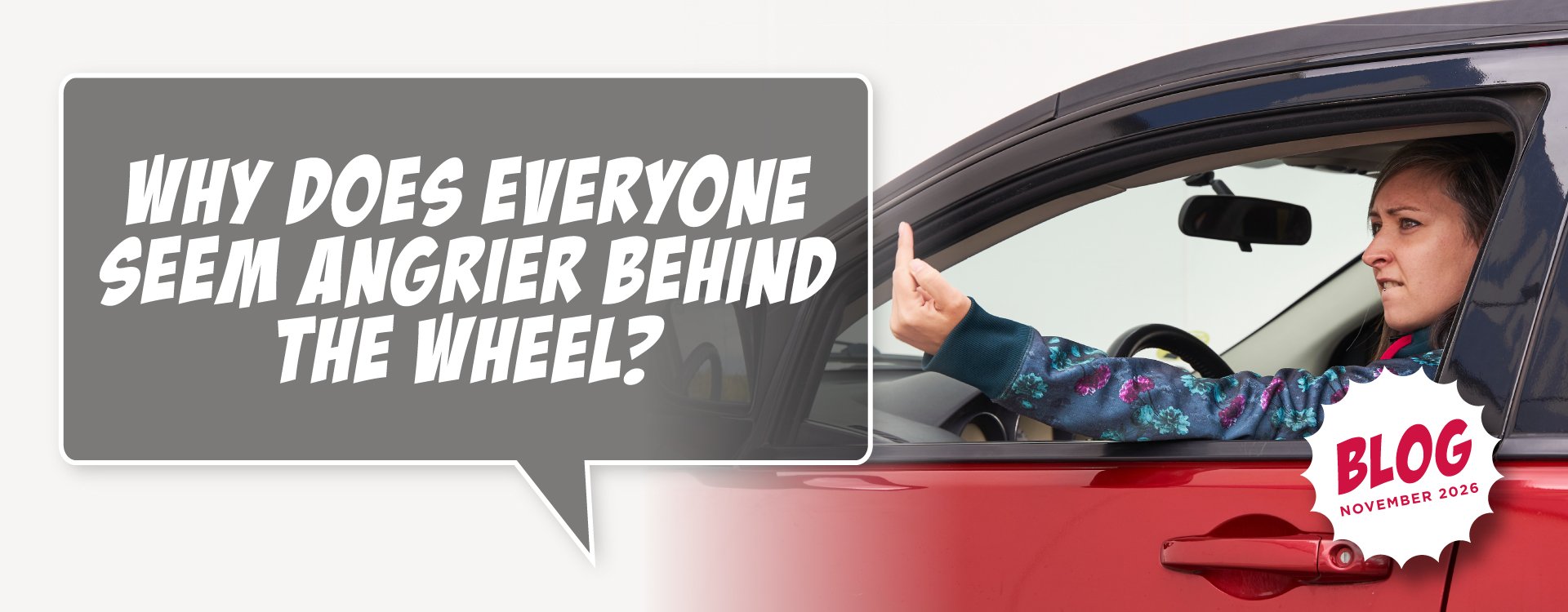
Why does everyone seem angrier behind the wheel?
In the home of Southern hospitality, strangers will hold the door open for you, greet you with a smile, and let you cut in the checkout line. But once you get behind the wheel, it can feel like you’re somewhere else entirely. What is it about encounters on the road that makes otherwise normal people act like they’ve been personally betrayed?
There’s actually psychology behind this mood swing. When someone cuts you off, you don’t see it as a traffic maneuver. You see disrespect. When someone doesn’t move when the light turns green, you see it as a violation against you and your plans.
Think about it: if you’re about to miss your turn and hesitate, and then hit your blinker, you know you couldn’t see the sign clearly. The driver behind you thinks you’re careless, or worse. You know your intentions. Other drivers can only judge your actions.
We’re pretty good at assuming the best of ourselves and the worst of others. On the road, three factors explain why: anonymity, distance, and a sense of control.
It’s easier to yell at someone when they’re speeding away than when you’re face-to-face in a checkout line. The distance doesn’t allow us the opportunity to interpret the other driver’s circumstances, facial expressions, or intent. A simple mistake can look deliberate when you don’t have enough information to assemble the full picture.
Then there’s control. We know where we’re going, when we need to get there, and what we have planned for the day. Traffic gets in the way, and it can feel that others are taking control of our time and ruining our day. Add holiday travel, busy roads, and busy holiday schedules, and even a minor delay can ruin your plans.
Sometimes, the person who merged in front of you becomes the target for frustration that may have started hours earlier.
The danger is how quickly the situation goes from getting to your destination on time, safely, to proving a point at 65 mph. Rather than letting a perceived injustice dictate your reaction, utilize these strategies from the UNC-Chapel Hill article, “Take the off-ramp From Road Rage,” to take some of the emotion out of your driving.
Assume it’s a mistake before malice. You don’t have to approve of it to move on.
Give yourself a time cushion. Being late makes every delay feel personal. Leave early and leave the stress out of your drive.
Don’t retaliate. Tailgating, blocking, or brake-checking doesn’t teach anybody a lesson worth learning.
Let the incident go. Once the vehicle is gone, don’t keep replaying the encounter over in your mind for the next 10 miles.
Being annoyed behind the wheel isn’t the same as road rage. Recognizing what triggers your frustrations can help you move on from a bad moment quicker.
If you find yourself at the end of retaliatory driving, don’t engage, keep your distance, don’t stop somewhere isolated, and contact emergency services if you feel that you are in danger.
It’s also a good idea to utilize a dash camera. Emotions are high when it comes to incidents of road rage, and video can provide useful evidence. It won’t save you from every confrontation, but it can help preserve the details that may otherwise come down to conflicting accounts.
After all, the goal isn’t to win an argument with a stranger you’ll likely never see again. It’s about getting home safely. No amount of honking, tailgating, or creative insults and hand gestures is worth the trouble they can bring.

OVER 35,000
REPRESENTED
E HAS
clients
and plans on
helping many more!
Meet with E for FREE. No fees until you win!

call e today!
(844) 833-3003


Serving All of South Louisiana with Offices in Baton Rouge
BATON ROUGE
8254 One Calais Ave, Suite 201 Baton Rouge, LA 70809
(844) 833-3003
info@eguarantee.com

QUICK LINKS
PRACTICE AREAS

MAKE BATON ROUGE
SAFE, CLEAN & LEAN!